Al Ain, the Garden City
Ninety minutes inland, the UAE’s garden city holds its first World Heritage site — an oasis running on 3,000-year-old falaj irrigation, a fort of desert-crossing photographs, and a mountain road worth the whole drive.
The short version
- The trip runs about ninety minutes by car on the E66 or by intercity bus from Dubai’s Al Ghubaiba station — Al Ain sits in Abu Dhabi emirate against the Oman border, with the town’s sights spread enough that the car (or taxis between stops) shapes the day (destination information at visitabudhabi.ae).
- The World Heritage credential is the 2011 headline: Al Ain’s cultural sites — the oases, the Hafit and Hili archaeology, the falaj system — became the UAE’s first UNESCO listing, recognizing continuous settlement since the Neolithic.
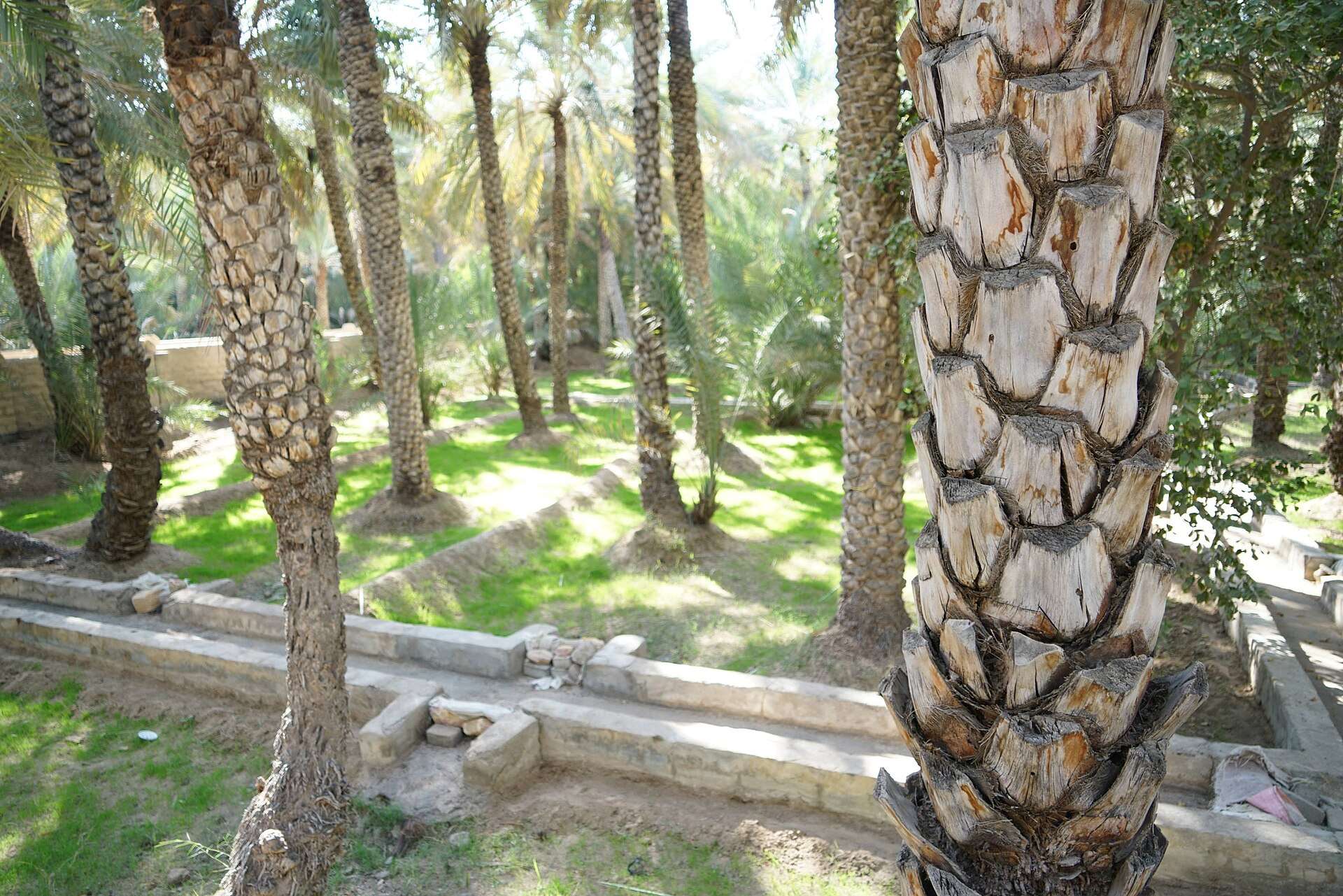
- The oasis per the alarm is the center: 1,200 hectares of date palms watered by the falaj — the gravity-fed channel system running here for some three thousand years — with free shaded walkways threading the plantations and an eco-center explaining the engineering that made desert cities possible.
- Al Jahili Fort (1890s, one of the country’s largest) anchors the heritage tier: restored mud-brick ramparts and the permanent Wilfred Thesiger exhibit — the desert traveler’s photographs of his 1940s Empty Quarter crossings with Bedouin companions, shown where his journeys touched.
- Jebel Hafit per the alarm closes the day: the 1,200-plus-meter mountain’s switchback road — the region’s celebrated drive — climbs to sunset viewpoints over the dunes and Oman, with the 5,000-year-old beehive tombs of the Hafit period scattered at its foot.
- The camel market per the alarm runs mornings at the edge of town: a working livestock market where the standing rules apply — patience, firm boundaries with the self-appointed guides who will adopt you, small notes for those whose help you accept, and photography by permission of the traders whose animals these are.

Getting there
The drive is the flexible answer and the bus the budget one — but the town’s geography (oasis center, forts around it, mountain south, market north) makes wheels between stops the day’s real requirement; taxis fill the gap for bus arrivals. The seasonal math per the glance is absolute: November through March walks comfortably, summer compresses the day to dawn (market, oasis) and dusk (mountain) with air-conditioned museum hours between.
The day
Camel market first if the morning allows — the trading at its liveliest early, the alarm’s patience-and-boundaries rules in force, and the spectacle real precisely because it isn’t staged. The oasis takes the late morning: the shaded falaj-side walkways, the channels’ quiet arithmetic (water shares measured in time, as they have been for millennia), and the eco-center’s explanation of why this green exists at all. Al Jahili fills the museum hour: the fort’s photogenic geometry and Thesiger’s photographs — the Empty Quarter crossings, the companions named and honored — worth unhurried reading. Lunch runs the town’s Emirati and subcontinental spread. The afternoon adds Hili’s archaeological park or the Al Ain Palace Museum (Sheikh Zayed’s former home, the modest rooms explaining the founding president’s register) by appetite. Jebel Hafit closes it per the alarm: the switchbacks climbed in the softening light, the tombs’ story at the foot, and sunset from the top with the dunes going amber toward Oman. The drive back to Dubai runs ninety dark, easy minutes.
When to go
November through March is the season — walking weather, market mornings at their fullest, the mountain clear. April and October are the fair shoulders; high summer per the glance reduces the day to its air-conditioned and golden-hour fractions, with the oasis walkways as the one midday exception (genuinely cooler under the palms, per the alarm’s claim). The date harvest (late summer) animates the plantations for those braving the season.
Frequently Asked Questions
What exactly is a falaj?
A gravity-fed water channel system — subterranean and surface conduits carrying groundwater from source to plantation, with rights divided by timed shares — engineering that has run in Al Ain for roughly three thousand years and across Arabia and Iran far longer. The oasis walkways follow working channels; the UNESCO listing rests substantially on them.
Who was Thesiger and why is he here?
Wilfred Thesiger crossed the Empty Quarter twice in the 1940s with Bedouin companions, photographed it all, and wrote Arabian Sands — the elegy for a desert life then vanishing. Al Ain was his gateway and rest point; Al Jahili’s exhibit shows his photographs where the journeys passed, with his companions given their names and due.
Is the camel market comfortable for visitors?
With the alarm’s rules, yes: it’s a working market, not an attraction — traders are generally welcoming, self-appointed guides expect tips for tours you may not have requested (decline firmly or accept knowingly), and photographing people or animals asks permission first. Mornings only; it’s largely done by ten.
Are the Hafit tombs visitable?
The beehive tombs — burial cairns from around 3000 BC that named the Hafit period — scatter the mountain’s foot, with restored examples viewable near Green Mubazzarah and the archaeology contextualized at Hili. They’re drive-up modest and history-enormous: the earliest chapter of the UNESCO listing, five thousand years before the towers of Dubai.
Al Ain or Hatta or Abu Dhabi from Dubai?
All documented on this network: Hatta for the mountain-pool adventure register, Abu Dhabi for the mosque and Louvre, Al Ain for oasis heritage and the deepest history. Adventure, splendor, or antiquity — the honest Dubai stay ranks by appetite, and Al Ain is the one that explains how people lived here before oil.