Sharjah in a Day
The emirate next door traded towers for museums — a restored old quarter, the blue-tiled souk, and a corniche built for the evening.
The short version
- Intercity buses run from Dubai’s Al Ghubaiba and Union stations to Sharjah’s Al Jubail hub every few minutes — routes via rta.ae — taking 30 minutes without traffic and noticeably more with it; taxis do the same run door to door. Go mid-morning, return before the evening rush.
- The Heart of Sharjah restoration has rebuilt the coral-and-gypsum old town — wind towers, courtyard houses, and souks — into the Gulf’s most convincing heritage quarter, with the Bait Al Naboodah house museum and the Souq Al Arsah’s pearl-era lanes; museum network at sharjahmuseums.ae.
- The Museum of Islamic Civilization fills a golden-domed former souk on the creek with astrolabes, manuscripts, and a gallery run through a millennium of science — the emirate’s UNESCO “cultural capital of the Arab world” title earning its keep.
- The Blue Souk — Souq Al Markazi — stacks two tiled wings with gold, carpets, and curios; haggling is the house sport, and the upstairs carpet dealers pour tea with the patience of men who always win.
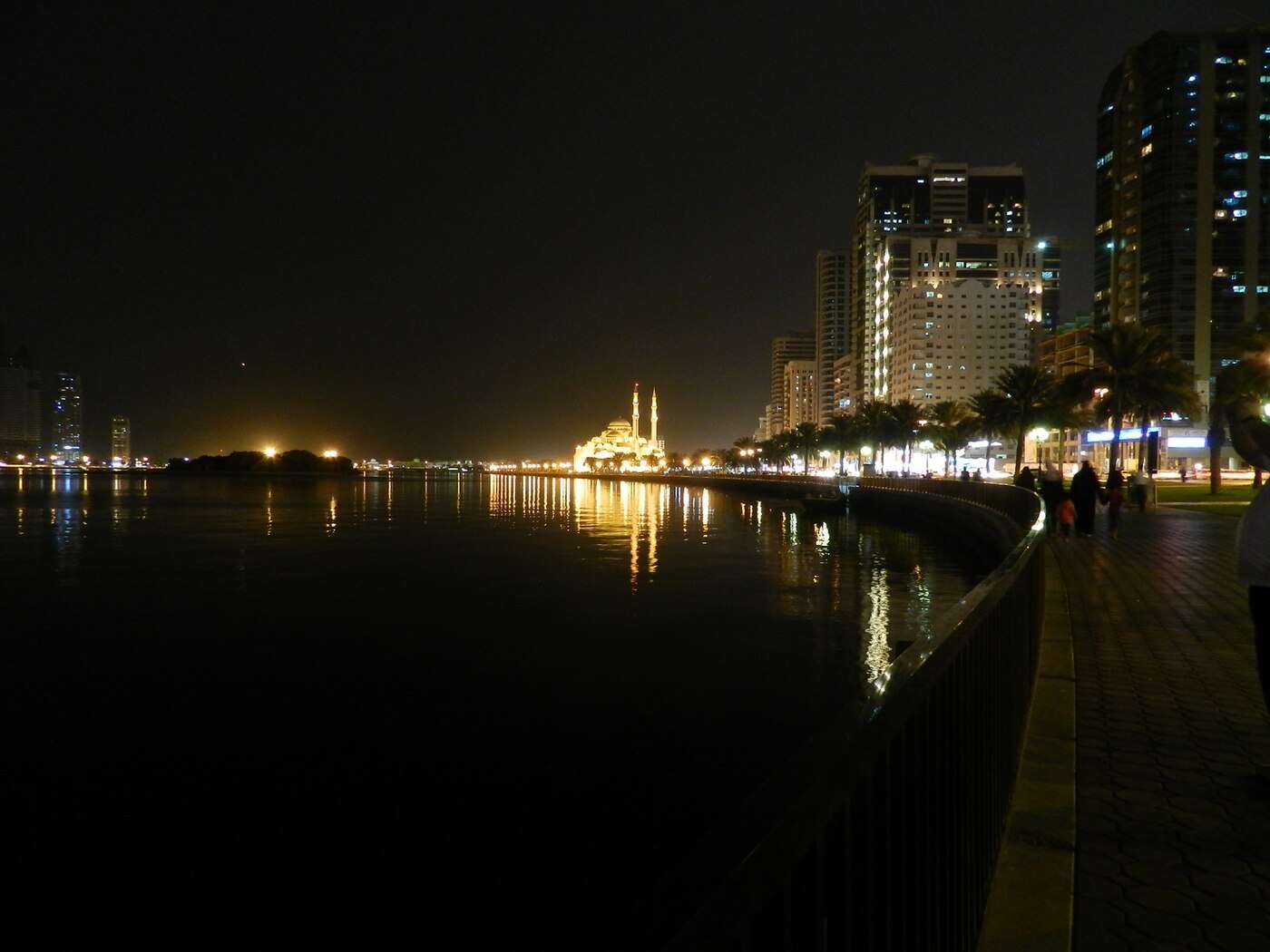
- Sharjah is dry — no alcohol anywhere in the emirate — and the evening compensates on the Khalid Lagoon corniche: fountains, families, and the Al Noor Mosque lit along the water.

Getting there
Buses leave Dubai’s Al Ghubaiba and Union stations for Sharjah’s Al Jubail every few minutes through the day — about 30 minutes clear, up to an hour in traffic — and Al Jubail lands you between the Blue Souk and the lagoon. Taxis cost more and save transfers; the metro does not cross the border. Within Sharjah, the creek-side sights cluster walkably, with short cabs covering the corniche’s length.
The day
Start in the Heart of Sharjah before the heat: Bait Al Naboodah’s courtyard, the calligraphy museum, and Souq Al Arsah’s shaded lanes where the pearl trade once haggled. Walk the creek to the Museum of Islamic Civilization for the astrolabes and the dome. Lunch on the corniche — Emirati or Lebanese, iced everything. The Blue Souk fills the afternoon: gold downstairs, carpets upstairs, tea with whichever dealer senses weakness. As the light drops, the Khalid Lagoon corniche takes over — the Al Noor Mosque glows, the fountain runs, and the families come out. Bus or cab back before the roads thicken.
When to go
November through March is the walking season — warm days, cool corniche evenings. Ramadan rearranges hours toward the after-dark visit, when the quarter comes alive. Summer compresses the day into museums and air conditioning with the corniche saved for late evening; the Sharjah Light Festival in February paints the mosques for free.
Frequently Asked Questions
How do you get from Dubai to Sharjah?
Intercity bus from Al Ghubaiba or Union to Al Jubail — every few minutes, about 30 minutes without traffic — or a taxi door to door. Avoid both directions at rush hour, when the traffic is at its worst.
What is the Heart of Sharjah?
The restored old town — coral-stone houses, wind towers, and souks rebuilt into museums, galleries, and courtyard cafés. It is the Gulf’s most complete heritage quarter and the city’s best morning.
Is Sharjah really dry?
Completely — no alcohol is sold or served anywhere in the emirate. Dinner runs on fresh juice and the corniche; drinkers plan their evening back in Dubai.
Which museum matters most with limited time?
The Museum of Islamic Civilization — a golden-domed creek-side souk filled with a millennium of science, art, and manuscripts. Ninety minutes covers the highlights.
Is Sharjah worth leaving Dubai for?
For old-town atmosphere, serious museums, and souk haggling that Dubai’s malls replaced, yes — it is the culture day of the emirates, 30 minutes and one traffic jam away.